
Blog
Police pledge greater transparency with media: what it means for schools

Dee Cowburn
Senior Adviser at Reputation Risk and Crisis Advisory Specialist, Alder
Read the blog
Some things don’t change – death, taxes, and UK newspapers absolutely loving any chance to write stories about things going on at an independent school.
Others, meanwhile, do.
Violent incidents in school are increasing. There is a seemingly endless stream of social media trends and issues – from the manosphere to ‘school wars’ and now ‘link-ups’ – which concern and bamboozle adults. And there is a new push by the police to be more transparent and proactive with media and journalists – a fact which should raise eyebrows for independent school leaders, in light of the aforementioned.
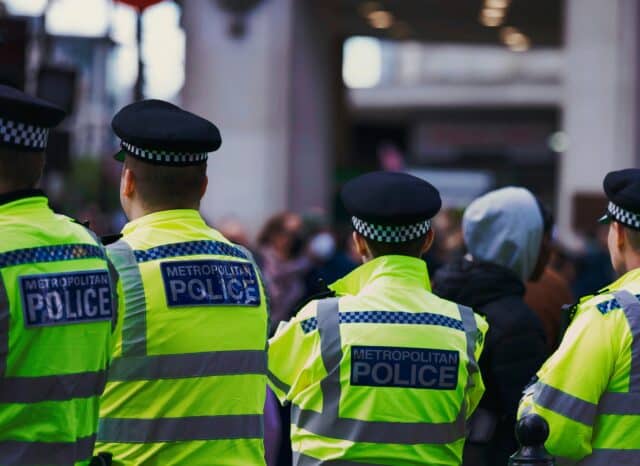
In February, new College of Policing guidance encouraged officers at every rank to speak to journalists on matters of public interest, including breaking news and major incidents, and aims to empower forces’ comms teams.
That was followed by media organisations and police chiefs signing a new Policing and Media Charter, which commits to closer working, and includes a number of specific, practical recommendations. They technically only apply in England and Wales, but it’s very possible that other public services will follow the police’s lead, as institutions globally grapple with trust and information dissemination challenges in an age of social media rage-baiting.
This charter has been years in the making. Police leaders had increasingly realised that their new default position – being tight-lipped and often suspicious of journalists – was damaging to public trust, and leading to situations like the information vacuum and public frenzy following the disappearance of Nicola Bulley in 2023. The ongoing inquiry into the Nottingham attacks is addressing similar concerns.
School work
Many school leaders will welcome the intentions, in principle. But greater police transparency brings particular risk for independent schools. Partial and premature information entering the public domain can quickly ripple through a school community, leading to concerns about pupil safety and wellbeing, speculation, and parent WhatsApp groups going into overdrive.
Many state schools already have an operational relationship with local police – a named contact, an established line of communication. Independent schools, particularly those in rural locations, may be behind the curve.
During my time working for the West Yorkshire Police and Crime Commissioner, I dealt with two serious incidents on school premises that became national news overnight. In both cases, the difference between a manageable situation and a reputational crisis came down to one thing: whether the school already had a working relationship with the force’s communications team – not a contact on a spreadsheet, but people who actually knew each other.
It’s key to build that relationship with the police before you need it. What is the protocol if a pupil is involved? What if a member of staff is arrested? At what point does the force communicate publicly, and what notification will the school receive first? These conversations are far easier to have on a quiet afternoon than at 11pm when journalists are already calling.
The Charter sets out a clear framework for how information is shared with media; understanding it matters. As the Charter says, and at Alder we agree, the phrase “off the record” is one to avoid – it might sound professional, but is in fact vague and easily misinterpreted.

Think ahead, and remember you can push back
In a crisis, you are not obliged to defer in all circumstances. You are entitled to ask whether a particular piece of information genuinely needs to go out, to understand the operational necessity behind it, and to make the case for a different approach where your school’s responsibilities to pupils and families are not being adequately weighed. Escalate if your concerns are not being heard. The impact on community confidence, and on families’ belief that your school is a place of safety, is a legitimate argument.
Think carefully about jigsaw identification: individual details released about a young person can combine to identify them even without naming them. And never communicate on a criminal matter without legal advice running alongside – what you can say differs significantly depending on whether someone has been arrested, charged, or tried.
The police are unlikely to be the last public institution to move towards greater media transparency. If their new Media Charter prompts one action, let it be this: dust off your crisis communications plan, and make sure it reflects the media landscape as it now is – not as it was – and that the relationships it assumes actually exist.
Dee Cowburn is a senior adviser at reputation risk and crisis advisory specialist Alder. She was previously an investigative journalist and an adviser to the West Yorkshire Police and Crime Commissioner and the Mayor of West Yorkshire.
Date
23 April 2026
Share


