Blog
Empowering Every Girl to Shape the Future
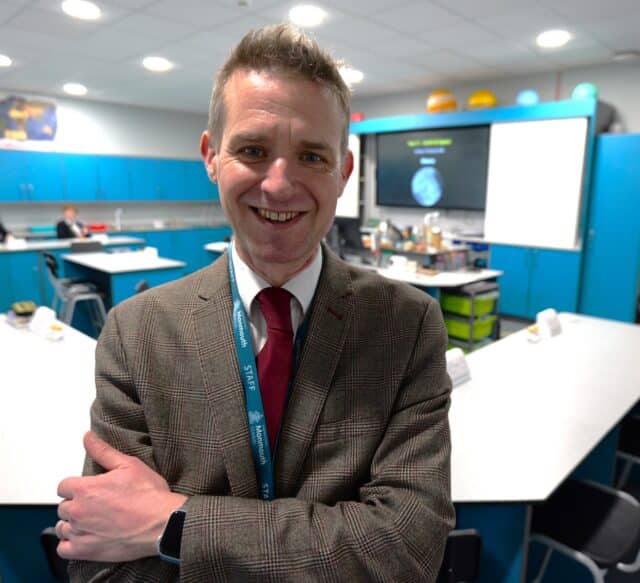
Dr Sion Wall
Head of Prep Science, Haberdashers' Monmouth School
Read the blog
Science changes lives. It fuels medical advances, helps us understand our planet and drives the technologies that shape our future. On the International Day of Women and Girls in Science, we are reminded that progress depends on who gets to take part. If science is to serve everyone, then every girl must know that science is for her.
At Haberdashers’ Monmouth Prep School, inspiring girls in STEM is not a special project or a themed week. It is part of our everyday practice. Our aim is to ensure that every girl develops curiosity, confidence and a genuine sense of belonging in science from the very beginning of her education.
This commitment is both professional and personal. As a parent of two daughters, both of whom have a strong focus on STEM subjects, I see first‑hand how confidence, encouragement and representation shape the choices girls make. Their experiences echo what research consistently shows: early support and positive scientific identity strongly influence whether girls continue to see STEM as a place where they belong (Archer et al., 2010).
My own career has reinforced this belief. Before teaching, I spent a decade in medical research where I worked alongside many outstanding female scientists. In those laboratories, women led research teams, designed studies, challenged assumptions and drove scientific progress. Science there was collaborative, rigorous and diverse by necessity. That experience has remained with me. It serves as a constant reminder that women’s contributions to science are neither new nor unusual, even if they are still too often under‑represented in the stories pupils encounter.
Building Confidence from the Start
One of the most persistent barriers facing girls in STEM is confidence rather than capability. While girls’ attainment in science remains strong in the early years, many begin to disengage or doubt their ability as expectations increase, often because of stereotypes rather than performance (OECD, 2023).
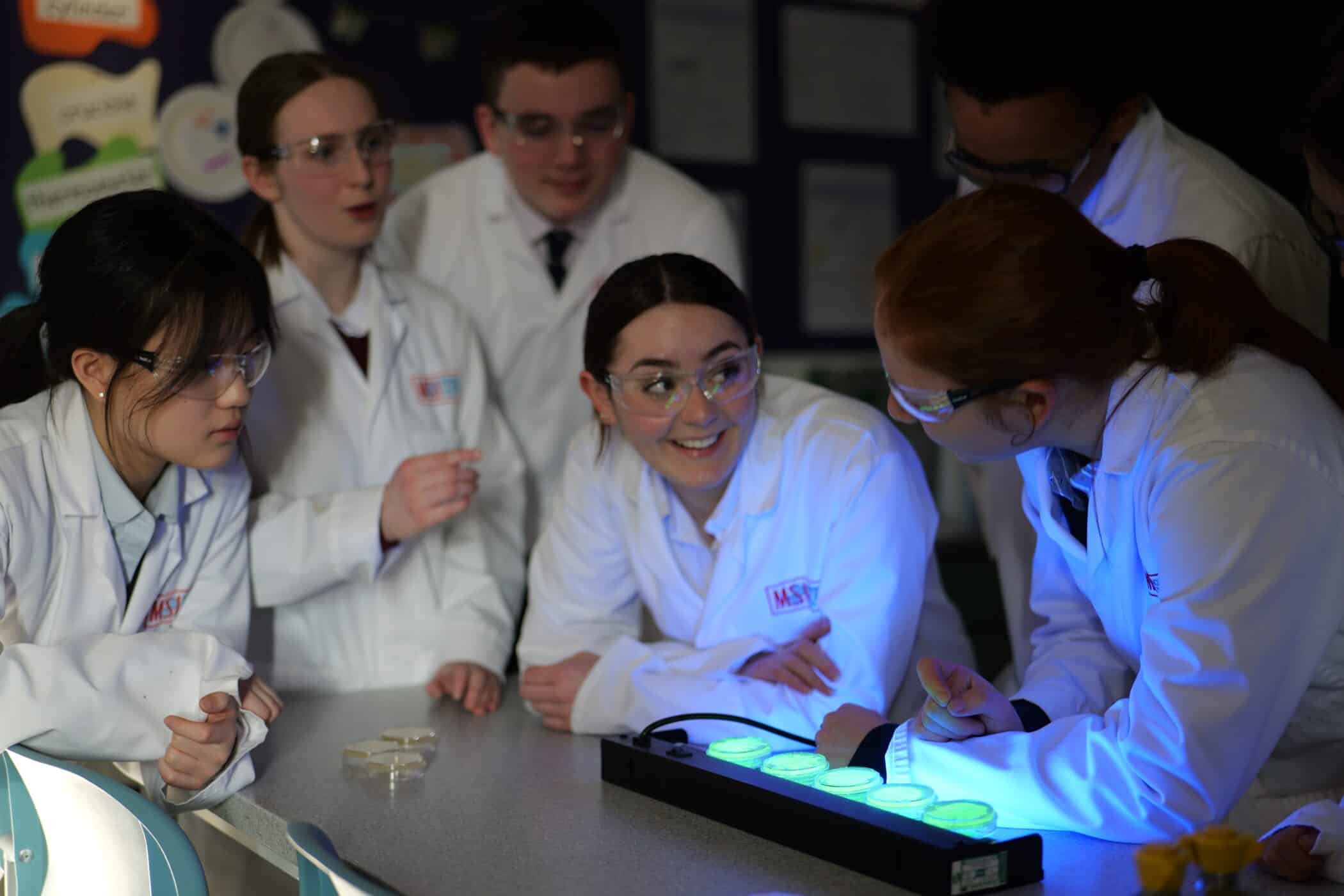
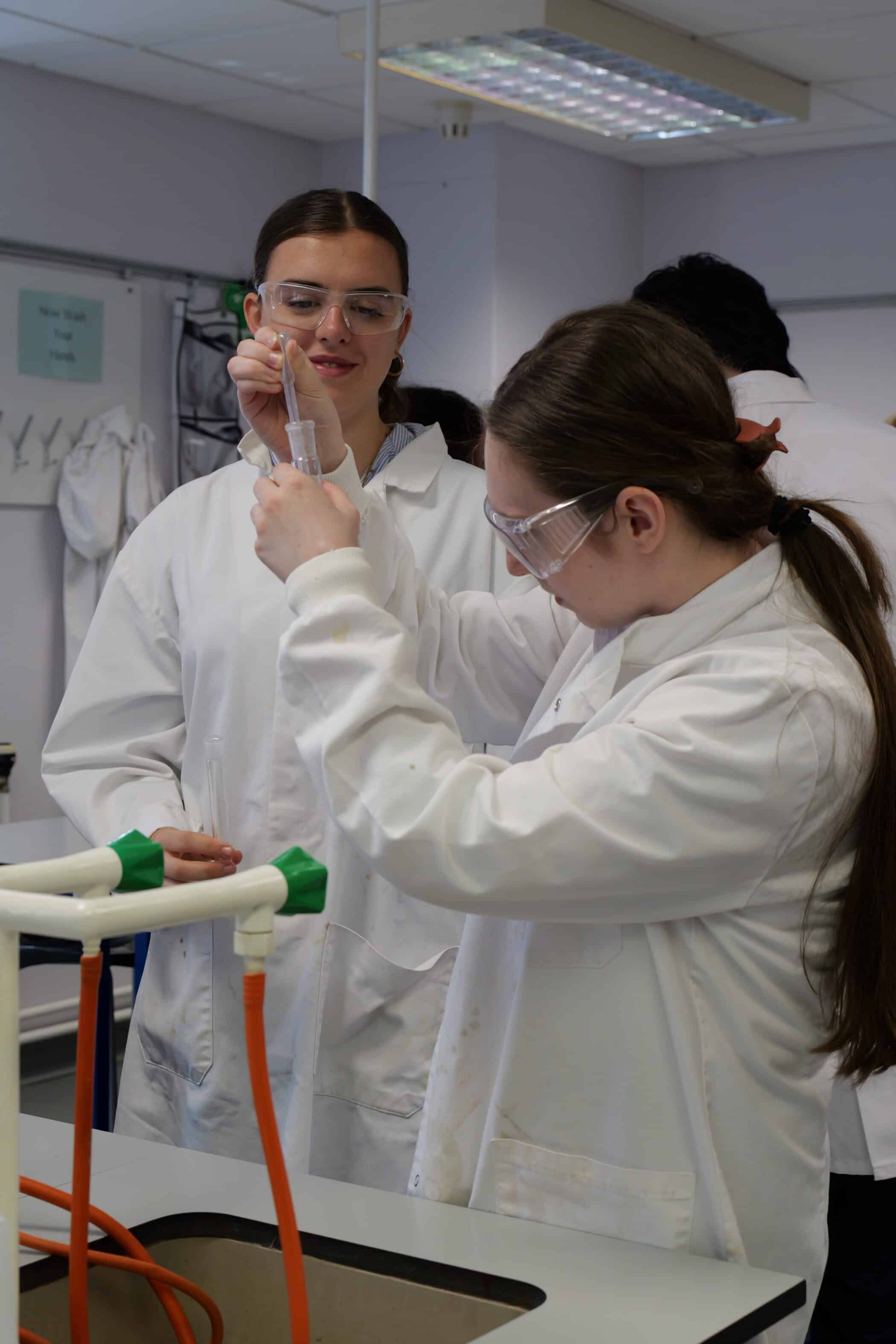
That is why early experience matters. From Year 1 girls at Monmouth Prep are encouraged to lead investigations, ask questions and test ideas. They, plan, choose equipment, make predictions and present conclusions. They are not passengers in practical work, they are scientists. Placing enquiry at the centre of our teaching reflects research showing that active, hands‑on learning plays a key role in developing scientific identity, particularly for girls (UNESCO, 2017).
This approach is reinforced physically within the learning environment itself. On both sides of my laboratory door are signs that read: “Experiment, Fail, Learn, Repeat”. Pupils encounter this message every time they enter and leave the lab. It serves as a constant reminder that science is an iterative process rather than a search for immediate correctness. By explicitly valuing persistence, reflection and revision, we normalise failure as an essential part of learning. This helps reduce fear of being wrong and encourages intellectual risk‑taking, factors shown to be particularly important in sustaining girls’ confidence as academic pressure increases (Dweck, 2006; OECD, 2023).
Across my own teaching career, I have observed a clear pattern in how girls’ participation in practical science changes over time. At prep school level, girls are often more likely than boys to assume leadership roles during group practical work, organising tasks, managing equipment and articulating conclusions. However, at senior school level, particularly in mixed‑gender settings, many of these girls begin to take a step back, becoming less visible during practical activity. By A‑level I’ve seen this pattern frequently shift again, with girls who have continued with science often re‑emerging as confident leaders within groups.
This is consistent with research identifying adolescence as a critical period when girls’ scientific confidence is often eroded by peer dynamics, gender norms, and classroom structures rather than limitations in ability. (Francis et al., 2017; Murphy and Whitelegg, 2006). Studies of practical science lessons show that boys are more likely to dominate equipment and decision‑making in mixed groups at secondary level unless roles are carefully structured, while girls’ participation and leadership increase again among those who persist into post‑16 science pathways (OECD, 2023).
Challenging Barriers Through Representation
Representation matters. When pupils repeatedly see scientists presented as male, it quietly shapes how they imagine their own futures and who they believe science is for. Research on science identity shows that children form these perceptions from a very young age (Master, Cheryan & Meltzoff, 2016).
Across the curriculum we deliberately highlight the work of women scientists, from historical figures such as Mary Anning, Marie Curie, Dorothy Hodgkin and Rachel Carson to women working today in medicine, environmental science and space research. These scientists are not presented as remarkable exceptions, but as integral to the ongoing story of scientific discovery.
However, challenging assumptions requires constant attention, recently, when naming Science teams after famous scientists, I chose the name ‘Team Franklin’ after Rosalind Franklin. Every pupil, boys and girls alike, immediately assumed the reference was to Benjamin Franklin. It was a small but revealing moment, highlighting how deeply embedded certain narratives remain. Research into implicit bias shows that these assumptions persist unless they are actively named and challenged (UNESCO, 2017). Conversely I later mentioned this to my 16 year old daughter who hopes to go into medicine. She knew exactly who Rosalind Franklin was and her role in the discovery of the structure of DNA but had never heard of Benjamin Franklin. It was a reminder of how exposure shapes understanding and of the progress that can occur when girls regularly see women represented within science.
We also ensure pupils see that science is not confined to laboratories through work linking science with health, sustainability and real‑world problem solving, girls see scientific thinking as purposeful, ethical and relevant. Studies suggest that connecting STEM to social impact increases engagement, particularly for girls (Archer et al., 2010).
At school, this belief is brought to life through opportunities such as the Monmouth Science Fair. Pupils design and present their own investigations, explain their thinking to peers and adults and take pride in being recognised as scientists. Female scientists with whom I previously worked in medical research act as judges, questioning projects and modelling what a career in science looks like. For the past decade, the head judge has been one of these colleagues, sending a powerful message that women belong at the centre of scientific expertise and leadership.
Creating a Classroom Where Every Voice Matters
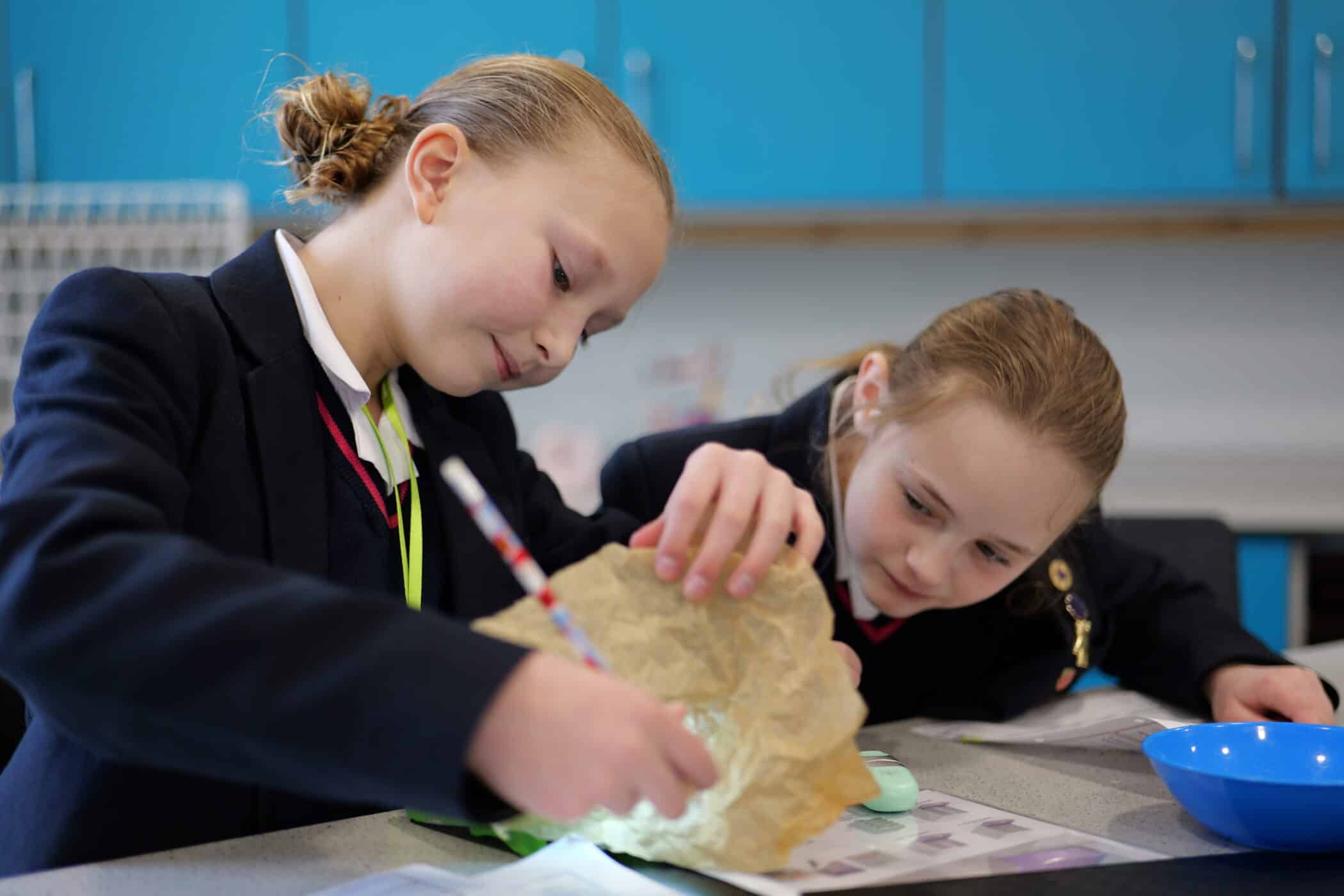
Discussion sits at the heart of good science teaching. Pupils are expected to explain their reasoning, question conclusions and justify ideas using evidence. This establishes a culture where speaking up is safe and expected. Research suggests that girls are often more concerned about being publicly wrong than boys, particularly as academic pressure increases (OECD, 2023). By framing error as essential to learning, we encourage intellectual risk‑taking and confidence.
Outdoor learning plays an important role too. Activities such as habitat studies and biodiversity surveys allow pupils to engage with science actively and meaningfully, broadening their understanding of what science looks like and who it is for (UNESCO, 2017).
Celebrating Achievement and Aspiration
Confidence grows when achievement is recognised. Girls regularly share findings, explain their thinking and present work, whether in lessons or whole‑school events such as the Science Fair.
As pupils progress, they develop increasingly sophisticated skills in analysing data, evaluating evidence and communicating complex ideas. Research shows that these experiences are key in sustaining girls’ participation and aspiration in STEM pathways (OECD, 2023). Just as importantly, they begin to see themselves as people whose ideas matter.
Looking to the Future
This year’s theme, “STEM Powered Futures: Elevating Every Girl, Shaping Tomorrow”, reflects something we believe deeply. When girls are supported, encouraged and challenged in science, the impact extends far beyond the classroom.
The future needs scientists who are thoughtful, creative and diverse in their thinking. At Monmouth Prep School, we are proud to play a part in helping girls see themselves as future scientists, engineers and innovators, or simply as confident thinkers who understand the world around them. As both an educator and someone who has worked within scientific research environments, I know the power of that belief.
Every investigation completed, every question asked and every assumption challenged helps shape a future where science truly reflects the talents of all.
References
- Archer, L., DeWitt, J., Osborne, J., Dillon, J., Willis, B. and Wong, B. (2010). “Doing” Science versus “Being” a Scientist. Science Education.
- Dweck, C. S. (2006). Mindset: The New Psychology of Success. Random House.
- Francis, B., Archer, L., Moote, J., DeWitt, J. and Yeomans, L. (2017). Femininity, Science and the Denial of Cleverness. British Educational Research Journal.
- Master, A., Cheryan, S. and Meltzoff, A. (2016). Computing Whether She Belongs. Journal of Educational Psychology.
- Murphy, P. and Whitelegg, E. (2006). Girls in the Physics Classroom: A Review of the Research. Institute of Physics.
- UNESCO (2017). Cracking the Code: Girls’ and Women’s Education in STEM.
- OECD (2023). Education at a Glance: Gender Differences in Education and STEM Pathways.
Date
11 February 2026
Share