Blog
Future Routes by Opening Doors and Expanding Dreams
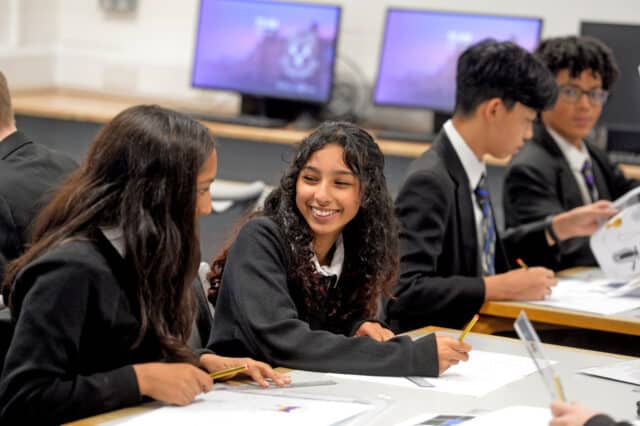
Rebecca Willis and Gunmeet Sethi
Head of Careers and UCAS and Head of Science, Operations and Data Lead, Nottingham High School
Read the blog
An Inclusive, Whole-School Approach to Careers Education from Nursery to Year 13.
At Nottingham High School, careers education is inclusive, progressive, and embedded throughout school life, from the earliest years in our Nursery through to Year 13. Rather than viewing careers guidance as a single event or a conversation reserved for older pupils, we introduce it as an evolving journey that grows with pupils throughout their time with us.
Younger pupils are encouraged to explore curiosity-led experiences that link learning to real-world careers, while older pupils engage in more targeted guidance, employability skills development, and exposure to higher education and workplace pathways. In the Early Years, career education begins with direct encounters with familiar community roles. In our Squirrels Nursery and EYFS, pupils welcome visits from the police and explore the idea of everyday superheroes in our community, including doctors, nurses, dentists, police officers, and firefighters.
As pupils progress through the school, activities such as interactive workshops, assemblies, university visits, networking events, and admissions preparation ensure that every pupil can access age-appropriate support, regardless of background or future ambition. By normalising careers conversations early and revisiting them regularly, we help pupils build confidence, self-awareness, and aspiration at every stage of their education so that they are ready to thrive in tomorrow’s world.
Showcasing Diverse Pathways Through Meaningful Experiences
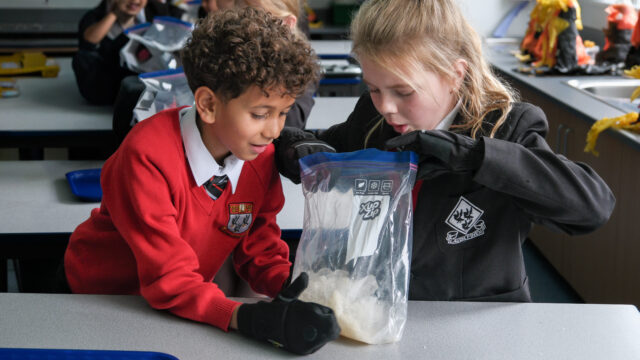
A key focus of our careers programme is demonstrating that there are multiple routes to success. Through our dedicated STEAM weeks, pupils explore pathways across science, technology, engineering, the arts, maths, healthcare, law, digital industries, and beyond. Hands-on workshops across Years 1-6 allow pupils to experience careers in action, from practising life-saving skills and exploring medical imaging, to building websites, composing music, mapping the sea floor, and using virtual reality to simulate professional environments. These practical experiences help pupils understand how classroom learning connects to a wide range of future career opportunities.
Alongside this, pupils across Years 7–13 engage in talks, career fairs and networking to explore apprenticeships, degrees in the UK and abroad, creative industries, engineering, business, and emerging technologies. By highlighting both academic and vocational pathways, we ensure pupils recognise that success is not defined by a single route, but by finding the pathway that best suits their interests and strengths, supported by use of the Unifrog platform and frequent discussions with school staff.
Inspiring Through Role Models and Challenging Stereotypes
Central to our approach is the belief that representation matters. By engaging with professionals who openly share their experiences, challenges, and successes, pupils see how diverse ways of thinking can lead to innovation, creativity, and leadership. This National Careers Week, pupils in IJS will learn about how different careers are beginning to use AI in the workplace. Years 7-9 will learn about the highs and lows of careers in sport from former elite athletes, whilst Years 10-13 will meet ‘Nottingham Women in Construction,’ helping to break down stereotypes and raise awareness of the expanding construction sector.
By exposing pupils to a wide range of role models, supported by our wider school community of parents, alumni and local businesses, we encourage them to reflect on their own aspirations and future possibilities. Engaging with professionals who challenge stereotypes and embrace neurodiversity broadens our pupils’ horizons and raises aspirations. These encounters encourage pupils to ask questions, challenge assumptions, and consider how their own skills and interests may translate into future careers. By combining aspiration with realism, our careers programme empowers pupils to make informed, confident choices as they prepare for life beyond school.
Impact and Outcomes:
- Superstar Crest Awards to our Year 5 pupils
- Bronze Crest Awards achieved by our Year 6 pupils
- 2024 – CDI Winner: Best Careers Programme (Pre-16 Education)
- 2024 – Shortlisted for Education Business Awards
- 2025 – Finalist, MK STEM Awards
- 2025 – Second Place, National Science Quiz Club Competition
- 2025 – National winners of 10x Challenge ‘For Good’ 15+ category
- 2024 – 2025 – Degree apprenticeships secured at Deloitte, Dyson, EY and Leonardo
Some Key Practical Steps to Learn from Our Journey:
A truly effective careers programme is inclusive, progressive and embedded throughout school life. For schools thinking of ways to enhance their career education, we offer the following reflections.
- Start Early and Build Progressively
Introduce careers education from the earliest years and develop it consistently through to Year 13, ensuring guidance grows in depth and relevance as pupils mature.
- Embed Careers Across the Curriculum
Integrate careers into everyday school life, through lessons, themed weeks, assemblies and workshops so pupils regularly connect learning to real-world pathways.
- Provide Real-World Experiences and Diverse Pathways
Offer meaningful encounters with employers, universities, and vocational providers, highlighting both academic and apprenticeship routes to show there is no single definition of success.
- Champion Inclusion, Representation and Aspiration
Expose pupils to diverse role models who challenge stereotypes and reflect a range of backgrounds, industries, and abilities, ensuring every pupil sees future possibilities for themselves.
- Track Impact and Celebrate Success
Monitor outcomes, recognise achievements, and share success stories to demonstrate the value of careers education and continually strengthen the programme.
Date
2 March 2026
Share