Blog
Running on Empty: Rethinking Resilience in Schools

Rob Allen
MVA Mental Health Lead, Minerva Virtual Academy
Read the blog
An Early Lesson in “Resilience”
As a teenager, I enjoyed a brief stint as a reasonably accomplished cross-country runner. Having proven myself inept in most team sports, I was relieved to discover that running through cold, muddy woods was something I could do quite well.
On one memorable occasion, during a major competition, I found myself in the lead. Midway through the course, I mistimed a jump over a fallen tree, took a heavy fall and badly injured both legs. Fuelled by adrenaline and endorphins, I got up and kept running, barely registering the pain or the alarmed shouts of course marshals urging me to stop. Somehow, I retook the lead and crossed the finish line to a mixture of cheers and disbelief, blood everywhere.
I ran straight past my applauding Headteacher and didn’t stop until I reached the school sick bay. Only then, once I had sat down, did the pain fully hit. Unsurprisingly, I also burst into tears.
What Was Missed
At the time, this was held up as an example of resilience in action, and I was awarded House Colours in assembly. As someone who often felt like an outsider, that moment of recognition mattered. But two important things were overlooked. First, continuing to run worsened my injuries; the consequences lasted for weeks. Second, what looked like resilience was not a conscious act of courage or determination. I was out of touch with my body, and my low self-esteem drove me to push far beyond what was safe or sensible in pursuit of approval.
That experience has stayed with me, particularly in my work in education. In many schools, resilience has become a celebrated virtue. It appears in mission statements, assemblies and pastoral messaging. Students are encouraged to persevere, push through challenges and “bounce back” when things go wrong. The underlying assumption is clear: resilience is something individuals must develop if they are to succeed.
But this framing is, at best, incomplete, and at worst, quietly harmful.
The Problem with How We Frame Resilience
Too often, resilience is treated as a personal trait: something a student either has or lacks. I have heard school leaders express frustration about students who don’t show enough “grit,” as though determination exists in isolation from circumstance. Yet the students most frequently described in these terms are often those facing the greatest challenges: young people dealing with instability at home, trauma, poverty, or the additional pressures of being neurodivergent in environments not designed with them in mind.
Students do not exist in a vacuum. Their capacity to cope, concentrate and engage is shaped by their environment: at home, in their communities and within school itself. When resilience is reduced to slogans about personal responsibility, these wider factors are pushed out of view. Telling a young person who is struggling with neglect or trauma to simply “try harder” is not only reductive; it risks compounding the difficulties they are facing.
What Actually Builds Resilience
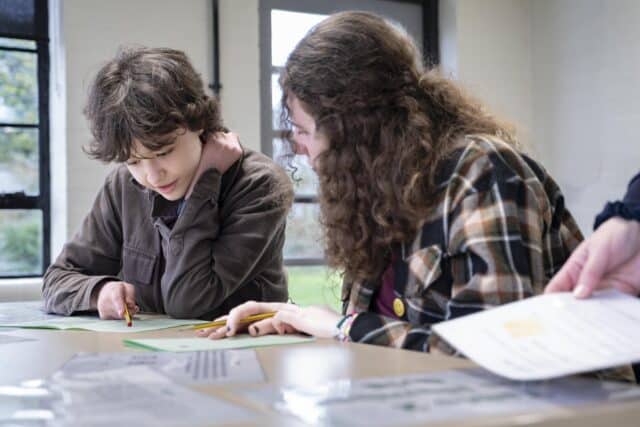
Research into resilience paints a more nuanced picture. One of the most consistent findings is that resilience is not something individuals generate alone, but develops through relationships and context. The stable presence of caring, supportive adults is one of the strongest protective factors in a young person’s life. Environments where students feel safe, understood and valued are far more likely to foster genuine resilience than those that emphasise endurance at all costs.
For schools, this has practical implications. It means thinking carefully about the conditions we create: the size and structure of classes, the training and support given to staff, and the extent to which student voice is heard. It may involve trauma-informed approaches, or simply allowing more flexibility and compassion in how expectations are applied. Crucially, it requires a shift in language: from demanding resilience to asking how we, as institutions, cultivate it.
A Shift in Perspective
In my work with Minerva Virtual Academy (MVA), I meet many young people whose experiences of mainstream education have been marked not by growth, but by repeated messages to “get on with it” and “toughen up.” Their stories put my own cross-country misadventure into perspective. Yet it is striking how, given the right support, these same individuals often go on to thrive. With consistent relationships, a sense of safety and an environment that reflects their realities, they begin to re-engage, achieve and rebuild their sense of self.
There is no magic formula here. What makes the difference is not a sudden increase in individual toughness, but a change in context.
If we want to take resilience seriously in education, we need to move beyond celebrating it as an individual virtue. Instead, we should be asking harder questions about the systems we create and the environments we sustain. Not “Why can’t this student cope?” but “What does this student need in order to cope and are we providing it?”
Only then can resilience become something more than an empty slogan.
Date
12 May 2026
Share