Blog
Strathpuffer 24-Hour Mountain Bike Race – Adventure, Character and the Evolution of School Sport
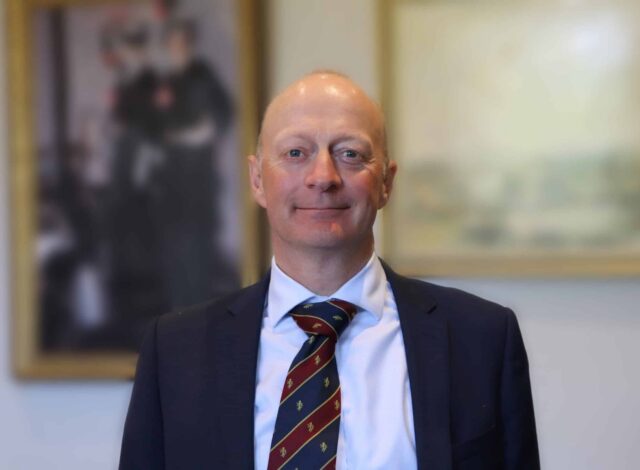
Richard Travers
Deputy Head, Enrichment, George Watson's College
Read the blog
In Adventurous Learning: A Pedagogy for a Changing World [1], Simon Beames and Mike Brown argue that meaningful adventure experiences are characterised by four elements: mastery, agency, authenticity and uncertainty. Increasingly, schools are recognising that these elements are powerful drivers of character development, resilience and long-term wellbeing. Experiences that challenge pupils physically and mentally, whilst remaining carefully structured and supervised, can offer forms of growth that are difficult to replicate within more conventional educational settings.
The Strathpuffer 24-hour mountain bike race, held each January in Strathpeffer near Inverness, provides a striking example of this kind of educational opportunity. The race runs continuously from 10 a.m. on Saturday until 10 a.m. on Sunday. Teams and individuals compete to complete the greatest number of laps of a 12.5 km off-road course, often in freezing temperatures and complete darkness.
For our school, entering the event for the first time was motivated not simply by sporting ambition, but by a broader educational aim: to expand the kinds of challenges we offer pupils. Traditional school sport remains hugely valuable, yet it does not necessarily engage every young person. Adventure-based events such as this can broaden participation and redefine what sporting success looks like. Pupils who may not see themselves in conventional team sports can find purpose, belonging and confidence in endurance, exploration and outdoor challenges.
Our Principal, Lisa Kerr, had previously seen the impact of such opportunities and the Strathpuffer while Principal at Gordonstoun. Encouraged by that experience, and by the enthusiasm of a group of committed mountain-biking pupils, we decided to take on what is widely regarded as one of the most demanding winter endurance races in the UK.
Preparation, Safety and Responsible Risk
Adventure education must balance genuine challenge with careful preparation. The aim is not to remove risk entirely, which would undermine the authenticity of the experience, but to ensure that it is managed carefully and responsibly.
Our pupils were already keen mountain bikers; hours spent on their bikes had honed their trail skills, they had well-developed technical skills required for winter mountain biking, as well as the physical endurance needed to ride multiple laps in difficult conditions. Equipment preparation was equally important: bikes were checked, lighting systems tested, and repair skills practised, but nothing could fully prepare us for the snow and ice-covered dark course.
Safeguarding and supervision were also central to the planning. Riders were only permitted to complete laps independently if they were over 14 years old, and staff were available to ride alongside in a support capacity where appropriate. Risk assessments prepared using the Scottish Framework for Safe Practice in Off-site Visits ‘Going out There’ covered everything from cold exposure and night riding to mechanical failure and fatigue.
By the time we arrived at the race, the pupils understood that they were entering a demanding environment — but one that had been prepared for.
Entering the Adventure
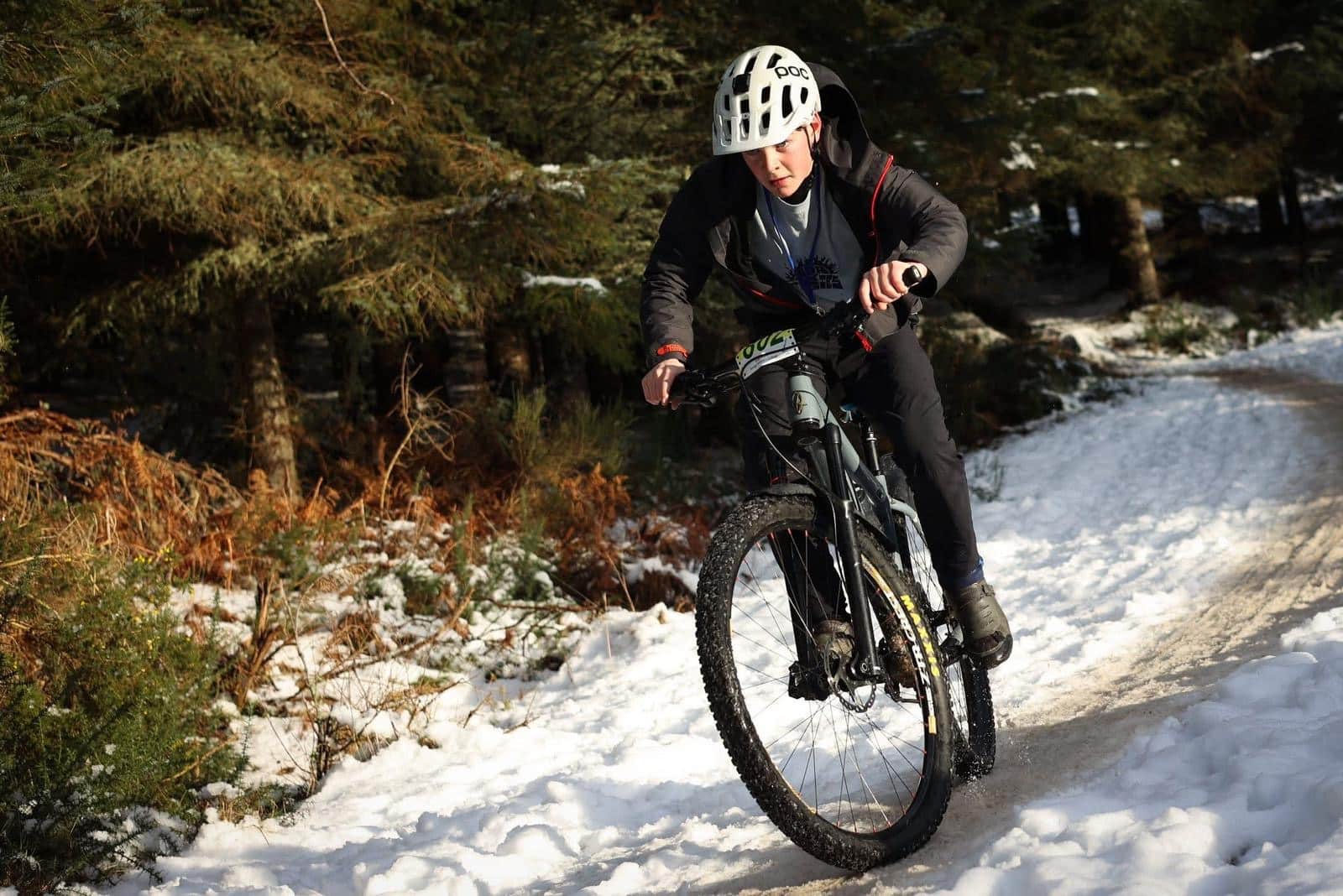
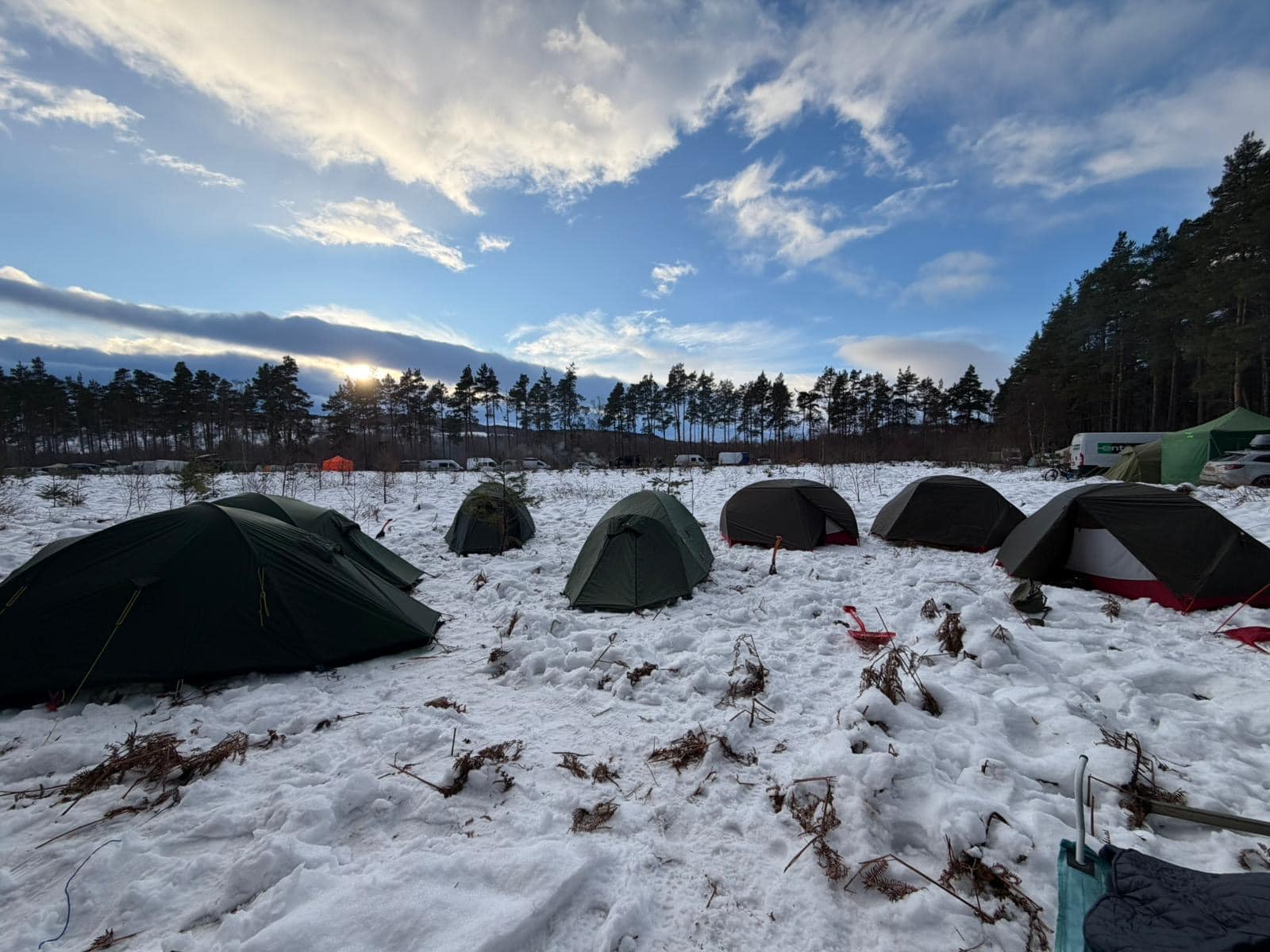
The forecast promised classic “Puffer” conditions: bitter cold, darkness and snow. Ice lay across both the course and the campsite. Our first challenge was simply establishing base camp.
With the team pushing behind it, we managed to coax the minibus onto our campsite without resorting to snow chains. Camp was quickly assembled: a tarp-covered fire for warmth, a bike repair station, a tepee for equipment and changing, and several small tents where riders could snatch sleep between laps.
Skills developed through The Duke of Edinburgh’s Award expeditions proved invaluable. Pupils and staff worked together instinctively, pitching tents, organising equipment and preparing bikes in the bright but intensely cold Highland air.
As a team of seven riders (the maximum allowed is eight) taking part in the school’s race for the first time, we set modest goals. Our aim was simply to ensure that every pupil completed laps, performed to the best of their ability, and gained experience.
What we had not fully accounted for was the element of uncertainty that defines the Strathpuffer.
Our younger riders went out first so they could see the course in daylight before tackling it in darkness. They returned with impressively competitive times. Then an unexpected development changed the dynamic of the race: the local favourites from Dingwall Academy suffered a mechanical failure that suddenly pushed them down the placings.
Unexpectedly, we found ourselves in the lead.
The Long Night
The team’s competitive instinct quickly emerged. Bikes were repaired and prepared. Riders were fuelled and encouraged to rest between laps. The leaderboard was checked regularly.
By the early hours of the morning, the race had entered its most demanding phase.
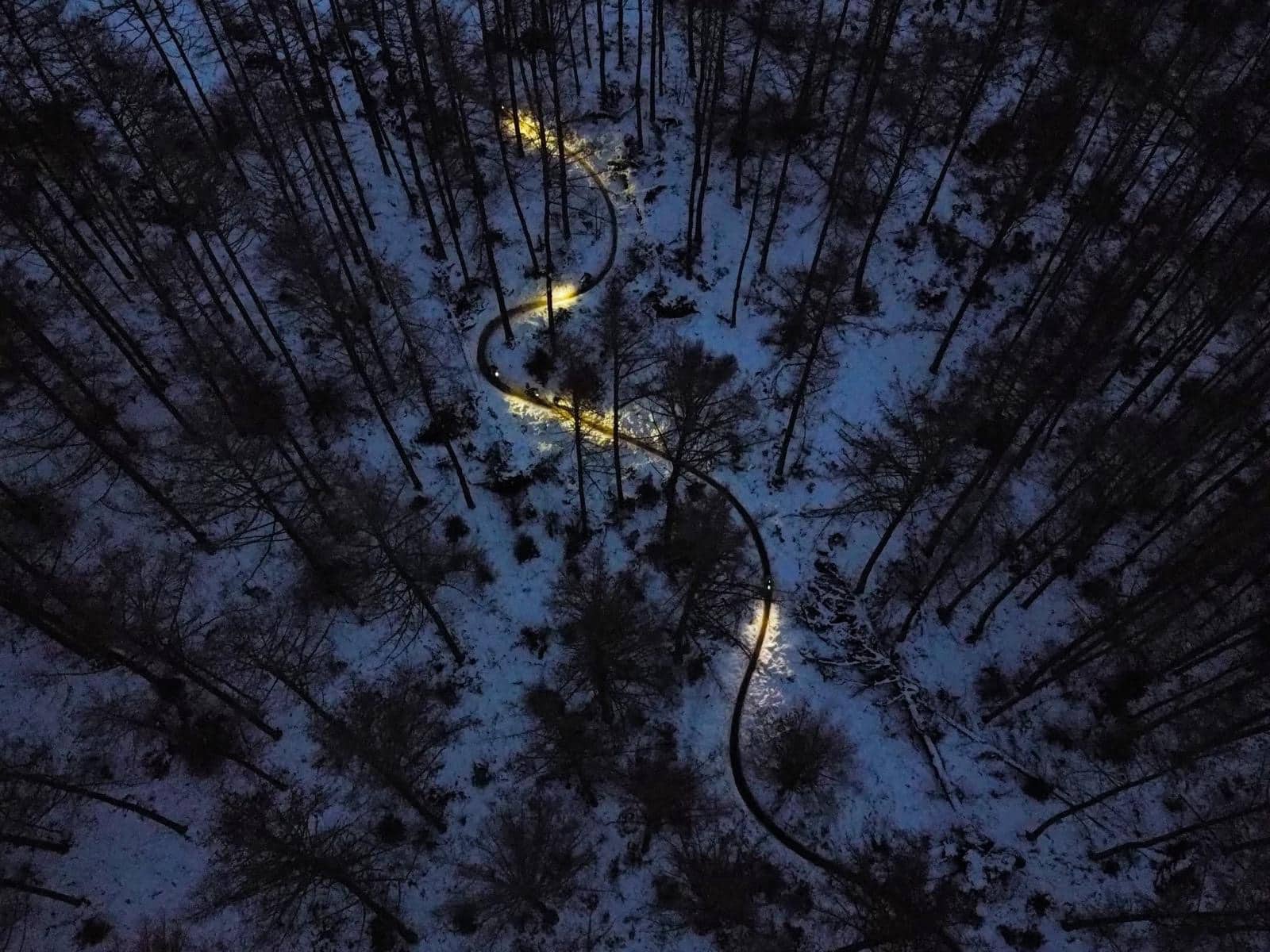
At 4 a.m., I found myself riding a support lap alongside one of our pupils. The trail ahead was illuminated only by the narrow beam of my bike lights reflecting off the snow. Before long, the pupil I was accompanying disappeared up the climb ahead, leaving me alone on the frozen track.
In that moment, the world seemed to shrink to a small patch of illuminated snow.
Then, about six kilometres into the lap, my headlamp flickered and died.
For a brief moment, the vulnerability and the authenticity of the adventure and the situation was unmistakable. If my remaining light failed, I would be facing a long walk back through the snow in freezing conditions. Fortunately, relief arrived in the form of distant music and voices from the marshal’s tent, and the sound of the race’s all-night DJ. As I stumbled off to my tent and handed over to my colleagues, we were still narrowly leading.
Victory wasn’t to be, as we waited for the final lap times to come in, we were just beaten into second place by the local school, the riders from Dingwell Academy.
Anyone who rode the course couldn’t deny that this was the very definition of an authentic challenge, with individual agency at the heart of it. Once pupils left the start, they themselves would be responsible for any minor mishaps or mechanical issues.
Community, Challenge and Wellbeing
Yet what stood out most over those 24 hours was not simply the competition. It was the community that formed around the challenge.
Teams encouraged one another. Riders compared experiences of the icy track. We all marvelled at the individual competitors who snatched twenty minutes of sleep and then climbed back onto their bikes to head once more into the darkness.
For pupils, this was an encounter with a form of challenge rarely experienced in everyday life. They faced cold, fatigue, and uncertainty, but within a supportive community that celebrated effort and perseverance.
At a time when young people are often shielded from discomfort, experiences like this can play an important role in building resilience and well-being. Shared adversity strengthens friendships, develops confidence and fosters a sense of capability that extends far beyond the race itself.
More Than a Race
When 10 a.m. on Sunday finally arrived and the laps were counted, our team had finished second. The pupils celebrated enthusiastically and were rightly proud of the result.
Yet the medals were not the most significant outcome.
Reflecting on the experience through Beames’ framework makes the deeper impact clear. Pupils developed mastery through the technical and physical challenge of riding a frozen mountain bike course. They exercised agency as individuals responsible for managing their own laps, equipment and decision-making on the trail. The race offered undeniable authenticity, taking place in a real and demanding environment. And throughout the event, uncertainty remained ever-present, from weather conditions to mechanical issues and the unpredictability of endurance racing.
Together, these elements created an experience that was not simply about sport, but about character.
As the pupils slept on the minibus journey back to Edinburgh, it was clear that the greatest value of the Strathpuffer lay not in the final result but in what they had gained from the experience: resilience, confidence, teamwork and a deeper understanding of their own capabilities.
For schools seeking to broaden participation in sport and support the well-being of young people, adventure-based experiences like this offer a compelling model. They remind us that sometimes the most powerful learning happens not in comfort, but in the cold, dark hours before dawn – when young people discover just how much they are capable of.
[1] Beames, S. and Brown, M. (2016) Adventurous Learning: A Pedagogy for a Changing World. London: Routledge
Date
19 March 2026
Share