
Blog
What’s in a name?
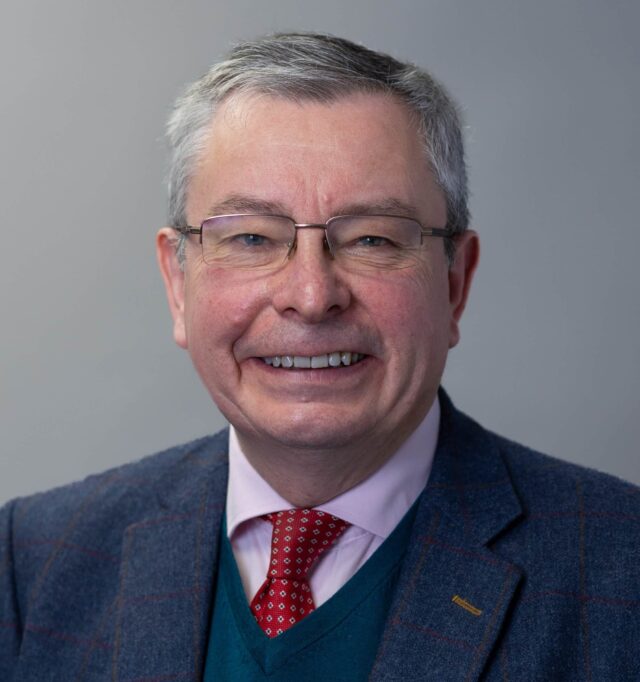
Dr Simon Hyde
Chief Executive Officer, HMC
Read the blog
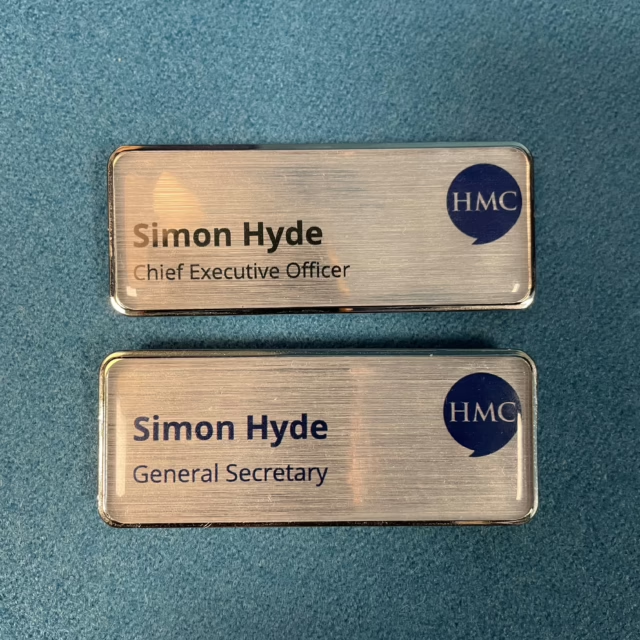
As the new school year begins and I start my sixth year at HMC, my job title is changing from General Secretary to Chief Executive. For most people (members included) this change will mean little and interest them even less. It is a triviality to all but a handful of colleagues who, like me, are interested in the history of the association and like to know why changes are made.
Until 1897 HMC’s elected Chair was responsible for all the association’s administration and correspondence. A secretary was appointed in that year from amongst the membership, but there was no permanent staff until the appointment of Dr William Bulkeley-Evans in 1904 on an initial salary of £75 a year.
Bulkeley-Evans is best known today for the scholarship established in his name to enable pupils from HMC schools to travel during their gap years – further details available at https://www.gap-year-the-bulkeley-evans.co.uk. For HMC, however, his impressive thirty years of service led to the professionalisation of the association’s administration. Once started, it was impossible to go back and on Bulkeley-Evans retirement in 1935, HMC and the Incorporated Association of Headmasters (IAHM) agreed to appoint a joint secretary as well as a deputy secretary as the volume of work was increasing, and now covered not only routine administration, but provided individual support to members and liaison with other school associations.
In 1978, the Headmasters Association (formerly IAHM) merged with the Association of Headmistresses to form SHA, the Secondary Heads Association. A second deputy secretary was appointed with a division of labour between the work generated by SHA and HMC respectively. This arrangement lasted until 1990 when the Conference decided once again to appoint its own Secretary and Membership Secretary.
The demerged secretariat was initially headed by Vivian Anthony, former Head at Colfe’s (and incidentally Deputy Headmaster of the King’s School in Macclesfield when I arrived there at the age of eleven). He was supported by Roger Griffiths, the serving SHA/HMC Deputy Secretary, who had led on HMC matters, having taken responsibility for some of the Committee work, member support and the annual conference.
When William Richardson took over from Geoff Lucas (Vivian’s successor), the role was advertised for the first time as ‘General Secretary’. The reasons for the change in nomenclature are not entirely clear, though do please get in touch if you know! It is likely to have been a combination of reasons, including the need to distinguish better between the two ‘secretarial’ roles (General and Membership). Perhaps by 2011, an advertisement for a ‘Secretary’ might have been less able to attract the right candidates. Another suggestion is that HMC’s status at the time as a trades union played a role as unions are typically headed by General Secretaries. Whatever the case, the designation was not destined for a long life as on William’s retirement in 2018, he was replaced by Mike Buchanan as ‘Executive Director’.
By the late 2010s some of HMC’s elected officers had reached the conclusion that HMC was in need of additional capacity and a new strategic plan. The collaborative diarchy that had served the association since 1990 had partly been fostered by the different experiences of the incumbents, but the increasing workload and regulatory burden meant that change was again contemplated. Unfortunately, the membership were not yet ready for this change. Mike, despite his experience as a successful Head and HMC Chair, struggled to progress an agenda with the governance structures of the time and the addition of an operating officer to the team blurred lines of responsibility and report. Mike’s tenure as Executive Director was short lived, and he left HMC in the spring of 2020.
Timing could hardly have been worse. Ian Power, Membership Secretary since 2009 following twelve successful years as Head of Lord Wandsworth’s College, stepped into the breach as acting General Secretary, but Ian had already announced his decision to retire in August 2020. With no consensus on strategy or structure amongst and mid-pandemic, there was little option other than the newly appointed Membership Secretary, Simon Hyde – me, to inherit the interim role.
It was obvious to all concerned that handling both roles in the middle of a pandemic was not ideal. Help was required and I agreed to hold the fort on the understanding that it would be forthcoming in the form of a broader role for the Melanie Horsburgh and the appointment of HMC’s first Director of Education, Kate Howell. The new arrangement had the additional advantage of saving the association money at a time when we were all rather uncertain what the future held.
For HMC, the pandemic turned out to be something of a blessing in disguise. It forced the association to adapt as change became part of the agenda of every school. Whilst a busy period, it also provided some time for reflection and crucially the acting General Secretary was for the first time able to communicate directly with all members of HMC’s governing Committee to explain the need for change. The HMC Conundrum, a document that sought to explore the way modern schools operated and how HMC might develop, was presented to a membership that now understood better what the association needed.
After six months in the interim role, the Officers decided to make my position as General Secretary permanent. Monarchy had replaced diarchy and the time was right to avoid anarchy by tackling HMC’s archaic governance structure. When a new job description was written in 2022, the title General Secretary and Chief Executive was used in an attempt to appease both conservative and progressive forces, but pragmatism and inertia dictated that the title General Secretary continued even after HMC’s trades union status had been surrendered later that year.
The last five years have seen continuing changes in HMC. We have grown both as an association (most notably in the international membership and our domestic pupil numbers) and in the size of the Head Office team. 14 in 2020 is now 32. The decision last term to transpose Chief Executive for General Secretary coincided with another change of structure. From September 2025, Melanie Horsburgh will take on the role of Deputy Chief Executive, whilst Chris Silver becomes Chief Financial and Operations Officer (CFOO). For some, the change will be seen as long overdue, bringing us into line with the other associations, all of which have CEOs. For others, the change will be a final break with HMC’s past as a trades union and ‘special register body’. The association remains both a professional association and a company limited by guarantee. As HMC continues to grow internationally, the nomenclature will be more familiar in jurisdictions outside the UK. And finally, it will limit the number of secretarial vacancies appearing on the CEO’s LinkedIn feed.
Thanks to William Richardson for his help with this article.
Date
2 September 2025
Share


