Blog
Making Values Visible
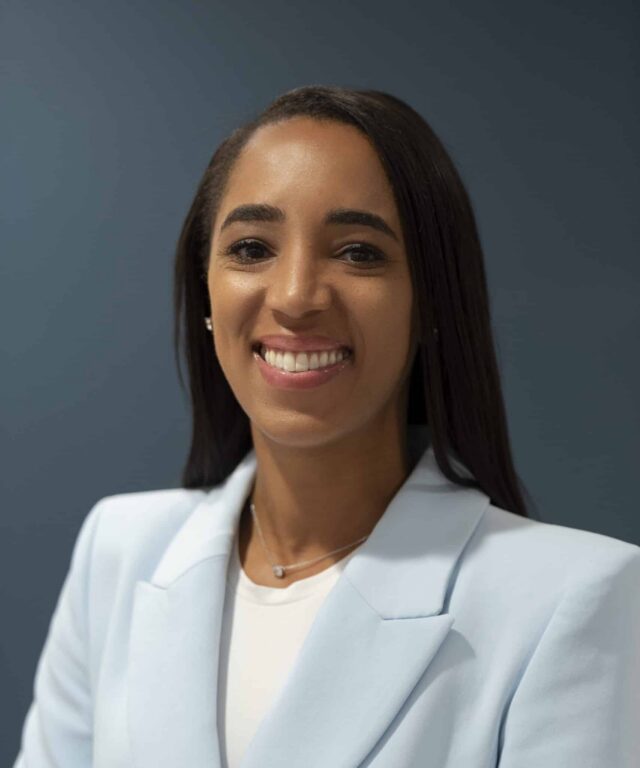
Chrystal Cunningham
Assistant Head, Pastoral and Inclusion, Wimbledon High School
Read the blog
School Diversity Week is celebrated by many schools through assemblies, events and conversations that encourage students to reflect on identity and belonging. These moments matter, as they amplify diverse voices, challenge assumptions and foster understanding.
Yet they also raise a more fundamental question for school leaders: how do we ensure that inclusion is experienced not just during a dedicated week, but throughout the everyday life of a school?
Most schools can articulate their values. Respect, kindness, inclusion and belonging are embedded in mission statements, strategic plans and school cultures. However, the challenge is not establishing commitment; it is ensuring consistency.
As school leaders, how do we know whether the values we champion are actually experienced by students in classrooms, curricula and daily interactions?
This question has become increasingly important in conversations around equity, diversity and inclusion (EDI). Across the sector, there is broad agreement that schools should prepare young people for a diverse and interconnected world while ensuring that every student feels seen, valued and able to thrive. Yet translating those aspirations into lived experience is often more complex than articulating them.

Our experience at Wimbledon High School suggests that the challenge is not primarily one of intent, but one of implementation.
One of the risks of a strong school culture is that values can become assumed. Staff may share a commitment to inclusion but interpret what that looks like in different ways. Expectations remain implicit, relying on individual understanding rather than collective clarity.
The question, therefore, is not whether schools have inclusive values. It is whether those values have been translated into visible practice.
For us, this prompted a shift in thinking. Rather than viewing EDI primarily as a cultural aspiration, we began to explore how it was being enacted through curriculum leadership. Instead of asking how inclusion could be added to existing practice, we asked what inclusion looked like within individual disciplines.
The answers were necessarily different.
The conversations taking place in a History department are not the same as those taking place in Mathematics, Science or Modern Foreign Languages. Questions of representation, perspective and knowledge are shaped by the nature of each subject.
For example:
- In Science, departments considered representation and challenged assumptions about who contributes to scientific knowledge.
- In Mathematics, contextualisation and accessibility were prioritised to ensure all students could see relevance and representation.
- In Modern Foreign Languages (MFL), authentic materials enabled exploration of identity, culture and inclusive language.
What became clear was that meaningful change depended not on a single framework, but on giving departments ownership of a shared purpose.
At Wimbledon High, departments embedded EDI principles within staff handbooks and curriculum planning processes. The aim was not uniformity. Rather, it was to establish a common expectation that inclusion should be considered through the lens of disciplinary expertise.
This reinforced a wider lesson about leadership. Sustainable change is most effective when it happens closest to the classroom. Schools need clarity of purpose, but they also need to trust professionals to interpret that purpose within their own contexts. Too much central direction risks compliance without commitment; too little risks fragmentation. The most effective approaches, therefore, create coherence while preserving professional ownership.
A second insight emerged through our work with students.
Student voice is often discussed in pastoral terms: belonging, wellbeing and participation. These are important outcomes. However, student voice can also be a powerful academic tool.
Research undertaken by Holly Rodgers, now Head of Sixth Form and recipient of the ICGS Researcher of the Year Award 2025, explored this through a Year 9 History enquiry that invited students to evaluate aspects of the curriculum and propose changes using disciplinary criteria. Rather than simply expressing preferences, students were asked to think as historians: to evaluate significance, identify gaps in representation and justify their conclusions through evidence.
The outcomes challenged a common assumption that student involvement risks reducing academic rigour. In practice, the opposite proved true. Students engaged deeply with disciplinary thinking while developing a stronger sense of agency and ownership over their learning.
This points to a broader lesson. Student voice is at its most powerful when it moves beyond consultation and becomes part of the learning process itself.
None of this suggests that inclusion is a destination. Like culture itself, it is an ongoing process of reflection and adaptation. Schools operate within changing social contexts, and the questions we ask about curriculum, representation and belonging will continue to evolve.
What matters is whether schools create structures that allow those questions to be asked honestly and revisited regularly.

At Wimbledon High, annual student surveys have become an important part of that process. As of 2025, 99% of Sixth Form students and 93% of students in Years 7–11 reported that they were learning about diverse backgrounds and perspectives through their education. An encouraging indication that this work was becoming increasingly visible to those it was intended to serve.
During this School Diversity Week, it is worth remembering that inclusion is not ultimately defined by a single event, programme or awareness campaign. Those moments can inspire reflection, but they cannot sustain culture on their own.
Whether the focus is inclusion, well-being, sustainability, digital innovation, the same leadership question remains: how do we move from values that are stated to values that are lived?
Our experience suggests that the answer lies not in creating ever more initiatives, but in creating clarity. It lies in making expectations visible, empowering professionals to take ownership and ensuring that students themselves play an active role in shaping the culture they experience.
Ultimately, the strength of a school’s values is not measured by how clearly they are articulated. It is measured by how consistently they are experienced.
Date
24 June 2026
Share