Blog
The power to make life good
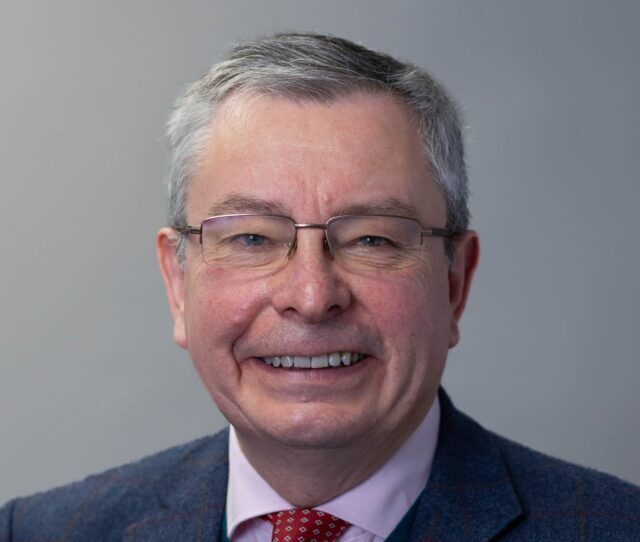
Dr Simon Hyde
Chief Executive, HMC
Read the blog
If there is one book that I would implore educators and policymakers to read at present, it is Daniel Susskind’s ‘What should my children do?’ Born out of a career steeped in thinking about the impact of technology on society and the world of work (it’s in the family DNA), this slim volume is difficult to put down.
It also provides a reasoned and insightful call for an enormous shift in what we teach and how we assess it. The argument is simple. AI has changed everything. It cannot be ignored, so it must be embraced, but not without ensuring that we preserve, protect and defend core human skills without which we are at the mercy of the technological leviathan.
Susskind identifies Wilfred Halliday Cockcroft as providing the kernel of the idea underpinning the book. Cockcroft was the academic plucked from obscurity to author the report that bears his name and which in 1982 proposed that maths should be taught and examined both with and without a calculator. The pocket calculator, like AI, threatened either to make essential maths skills redundant (through over reliance on the technology) or impoverished (by restricting or banning calculators). The answer was simple: teach both and test both. And this is Susskind’s mantra.
AI has such potential to enhance what we do and achieve that it would be mistaken (and naive) to banish it from our classrooms. But the danger of deskilling future generations is equally problematic. So, we must completely redesign what and how we both teach and assess to include the technology without becoming dependent on it: teach both with AI and without it. As assessment often validates teaching in the minds of students, we must assess both with access to AI and without it.
I can think of no more fundamental challenge to our profession, nor one that our politicians and political system may be less inclined to grapple with. After all, we have hardly proven adept at large scale system change in education and, given the pace of technological change, we have rarely needed to be more nimble.
If all this comes as a shock, there is more. First the good news: Susskind believes that teaching is one of the professions (once it evolves) that will be more durable in our AI-enabled future. This is in part because he believes that it takes human beings to fully be human. In nurturing the next generation, those skilled in the craft should be necessary, though not without pivoting in two ways. The first is shifting from ‘competency-based’ instruction to character education. The second is a move from the teaching the technical to the moral sphere. AI encourages us to revisit crucial questions about the purpose of education in a world where work may not be available to all as AI and machines can do things better and faster.
Teaching the basics, numeracy, literacy and critical thinking remain important. We have to teach them to use AI. But we must also to teach them, not to get used by AI.
The advent of AGI (Artificial General Intelligence or the point at which the technology can reason autonomously across any domain) is probably closer than most of us think. It is a game changer on many levels, not least because it challenges us to think creatively by removing one of our key assumptions about education: that it prepares us for the world of work. In a world where there are no certainties and where ‘work’ itself may be transformed, education can and must adapt.
Susskind provides a clarion call in the March towards the future. Recognising with Derek Parfit dangers as well as opportunities (‘the power to make life good’), we should progress thoughtfully and humanely, not turn away. As King Cnut demonstrated human potential must know its limitations.
Date
9 November 2026
Share